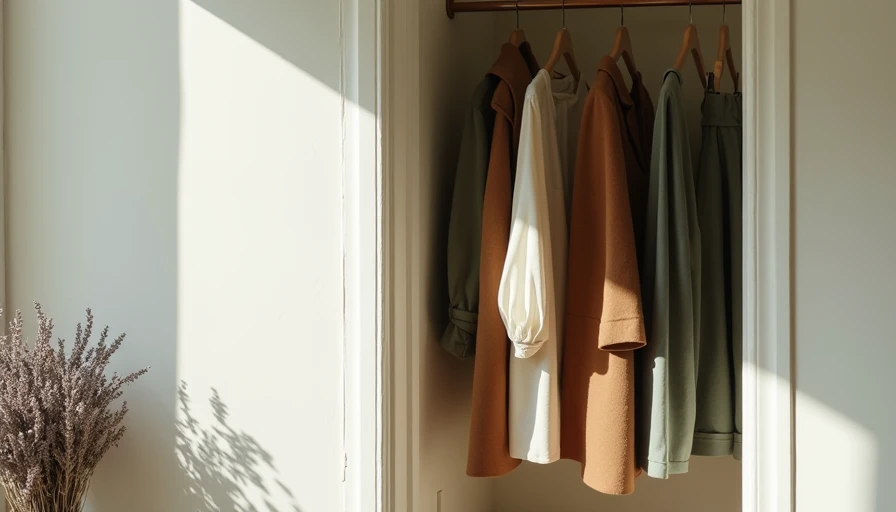
I have handled a significant number of coats in my professional life.
Not as a hyperbole or a rhetorical setup, but as a straightforward statement of professional fact. In five years of editorial work, I pulled coats for shoots, assessed coats in showrooms, carried coats in and out of fittings, held coats up to natural light to read their fabric, turned coats inside out to examine their construction, and wore coats in circumstances that ranged from a November rooftop in Los Angeles to a climate-controlled studio where the temperature was kept cold specifically to make winter clothing photograph correctly.
I also spent a considerable amount of money, over the course of my twenties, buying coats that turned out to be wrong in ways I did not have the framework to anticipate at the point of purchase.
Both of these facts are relevant to what I want to tell you, because the framework I now use when evaluating a coat investment comes from both sources equally: the professional knowledge accumulated across years of handling garments at close range, and the personal knowledge accumulated across years of making mistakes with my own money and learning, slowly, what those mistakes were actually about.
What I want to offer you here is not a ranked list of coat brands, or a seasonal edit of what is arriving in stores, or a guide to what the well-dressed woman is wearing this winter. There is no shortage of that content, and it is not what this column is for.
What I want to offer is something more durable: a way of looking at a coat that will serve you regardless of the season, the brand, or the number of zeros in the price.
First, On the Term Itself
Quiet luxury has had, by this point, sufficient cultural saturation that the phrase has begun to work against the thing it was originally describing.
When it emerged as a genuine aesthetic conversation — somewhere between the mid-seasons of Succession and the broader cultural exhaustion with visible logomania — it was pointing at something real and worth discussing: the idea that genuine quality does not need to announce itself, that the most enduring luxury is legible primarily to people who know what they are looking at, and that dressing well might be less about acquisition and more about discernment.
That conversation was interesting and, I think, largely correct.
What happened next was less interesting. The term was absorbed into the marketing vocabulary of brands at every price point, attached to things that had no particular relationship to the values it originally described, and eventually became its own form of performance — quiet luxury as an aesthetic to perform rather than a philosophy to practice.
I want to rescue the original idea, because I think it contains something genuinely useful. Particularly when applied to coats, which are the garment category where the gap between genuine quality and performed quality is widest, and where the consequences of getting it wrong are most expensive.
What a Coat Is Actually Doing
Before we discuss construction or fabric or any of the specific evaluative criteria I use, I want to establish something foundational: what a coat is for.
A coat is the outermost layer of a dressed human being. It is the garment that mediates between your interior life and the exterior world — literally and, if you allow yourself to think about clothing with any degree of seriousness, somewhat figuratively as well. It is worn across more hours, more weather conditions, and more varied social contexts than almost any other garment in a wardrobe. It is the first thing people see and the last thing you take off.
It is also — and this is the practical point I most want to emphasize — a garment that is primarily experienced by its wearer rather than its observers. You feel a coat from the inside before anyone sees it from the outside. Its weight on your shoulders, the quality of its warmth, the way it moves when you walk, the specific sensory experience of putting it on in the morning and taking it off at the end of the day: these are the primary facts of a coat's existence in a life.
This matters because it reorients the evaluation criteria. A coat that photographs beautifully but sits heavily on the shoulders is a worse coat than one that photographs plainly but moves with you like an extension of your own body. A coat that carries a prestigious label but loses its shape after a single season is a worse coat than one from a less famous house that holds its structure across five years of hard winters.
The question to ask of a coat is not will this impress the room but will this serve me. Those questions sometimes have the same answer. Often they do not.
The Construction Criteria That Actually Matter
The Interlining: The Invisible Architecture
If I could teach one piece of garment literacy to every woman who has ever stood in a coat department trying to make a decision, it would be this: turn the coat inside out and look at the interlining before you look at anything else.
The interlining is the layer of material between the outer fabric and the lining — the internal architecture that determines how the coat holds its shape, how it drapes when worn, and how it behaves across years of use. It is invisible in wear and almost never discussed in retail contexts, which is precisely why it is the single most reliable indicator of construction quality available to a non-specialist buyer.
A coat with a quality interlining — traditionally a woven canvas, sometimes a modern equivalent in well-made contemporary garments — will hold its shape independently of the outer fabric, will drape with a weight and authority that cheaper constructions cannot replicate, and will maintain its silhouette across years rather than seasons.
A coat with a fused interlining — where the interfacing is glued rather than sewn to the outer fabric — will often look identical on the rack, and will feel similar in the fitting room. The difference emerges over time, and it is significant: fused interlinings can bubble, separate, and degrade in a way that canvas cannot, and when they begin to fail, the coat is effectively finished.
You can often identify a fused interlining by folding the fabric between your fingers and feeling for rigidity in the wrong places — a stiffness that does not belong to the outer fabric itself. In a quality coat with a sewn canvas, the interlining moves with the fabric. In a fused coat, it resists.
This test works across price points. I have failed expensive coats with it and passed inexpensive ones.
The Seam Finish: What the Inside Tells You About the Outside
After the interlining, I look at the seam finishing — the way the raw edges of the fabric are handled on the interior of the garment.
In a well-constructed coat, the interior seams will be finished cleanly and consistently: either bound with a fabric tape, pinked and pressed flat, or — in the best cases — finished with the same fabric used for the lining. The stitching will be even, the tension consistent, and the overall impression will be of something made by someone who expected the inside to be seen.
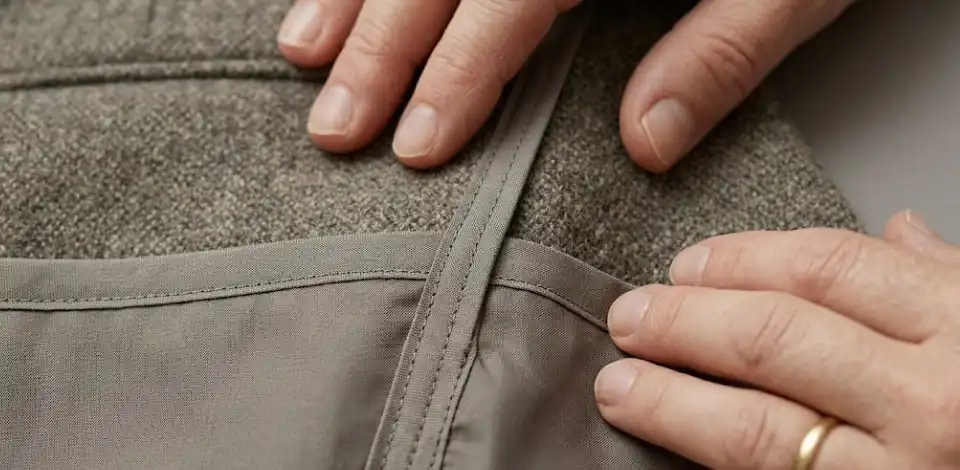
This expectation — that the inside matters — is, in my experience, one of the most reliable proxies for overall construction quality. A manufacturer who finishes interior seams with care is a manufacturer who is thinking about the life of the garment rather than the moment of the sale.
Loose threads on interior seams, uneven stitching, or raw edges handled with obvious speed are all indicators that the visible exterior of the coat was considered more important than the invisible interior. That priority tends to be consistent throughout the garment.
The Button Attachment: A Small Detail With Large Implications
I turn to the buttons last, and I am aware that this sounds trivial. It is not.
How a button is attached to a coat tells you a great deal about the labor and attention invested in the garment's construction. In a well-made coat, buttons are attached with a thread shank — a small column of wrapped thread between the button and the fabric that allows the button to sit correctly when the coat is buttoned through a thick layer of fabric. This is a detail that requires additional time and skill. It is, as a result, frequently omitted in coats that are otherwise well-presented.
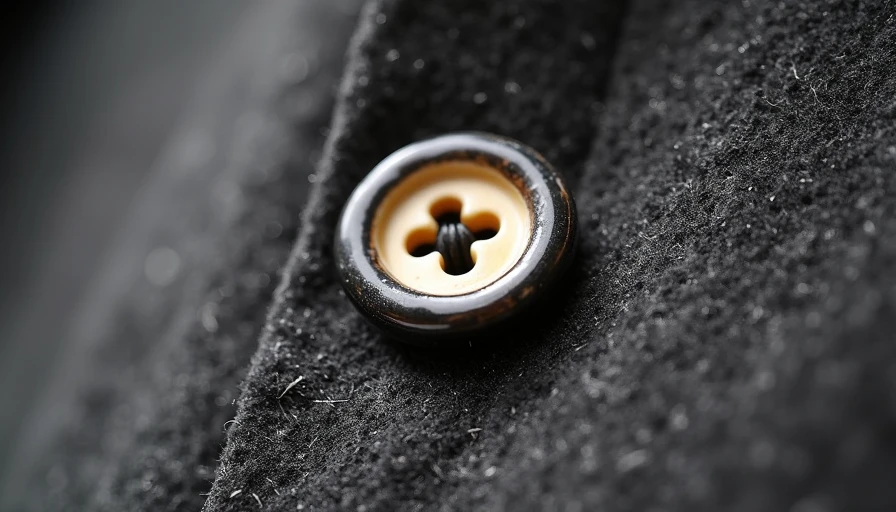
Press the buttons of a coat you are considering purchasing and check whether they have give — whether there is a small space between the button and the fabric that allows for movement. If the button sits flat against the fabric with no shank, it will pull and stress the surrounding fabric every time the coat is buttoned, eventually distorting the placket in ways that are neither repairable nor attractive.
The Fabric Questions Worth Slowing Down
For Weight, Not Warmth
The most common misconception I encounter about coat fabric is that weight and warmth are the same quality. They are related but distinct, and conflating them leads to purchases that are wrong in both directions.
A very heavy coat fabric — a thick double-face wool, for instance — can be warmer than a lighter alternative, but weight is not the primary driver of warmth. Fiber content, fabric construction, and the presence or absence of an insulating interlining are all more significant determinants of thermal performance than fabric weight alone.
What weight does determine, more reliably than warmth, is drape and silhouette. A heavier fabric will fall with more authority, hold a structured shape more naturally, and move with a particular weighted quality that lighter fabrics cannot replicate. This is a visual and tactile quality that many women associate with quality in coats — the satisfying way a good wool coat swings when you walk — and it is a legitimate quality to seek. But it is separate from warmth, and should be evaluated separately.
The Wool Question
Wool remains, in my professional and personal assessment, the most versatile and most reliably excellent fiber for coat construction. It is breathable in a way that synthetic alternatives are not, it responds to moisture rather than accumulating it, it maintains its shape across years of wear when properly cared for, and it accepts tailoring and pressing in a way that allows construction details to hold their intended form.
Within wool, the distinctions that matter most are fiber length and processing. Long-staple wool, which includes merino and many high-grade British wools, produces a fabric that is both softer and more durable than short-staple alternatives — the longer fibers are less likely to pill, less likely to felt with washing, and less likely to lose their surface quality over time.
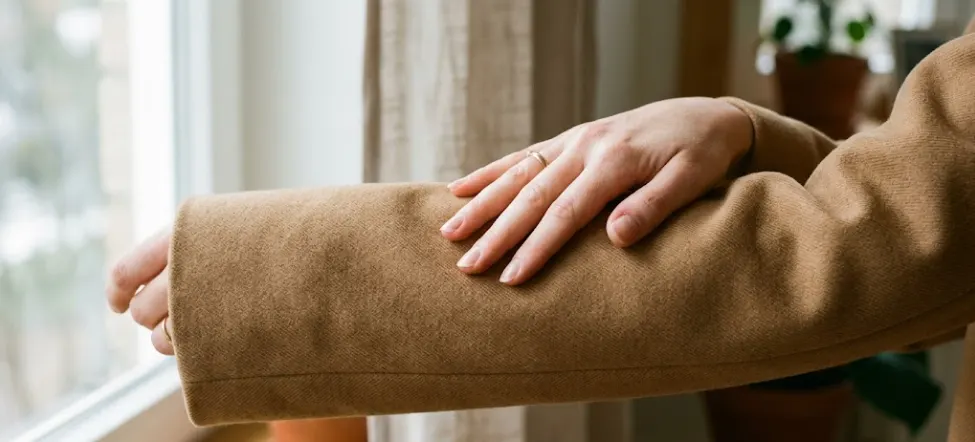
Cashmere coats are the conversation I approach with the most caution, because the range of quality within the cashmere category is wider than in almost any other fiber category. A cashmere coat at a mid-market price point is almost certainly made with shorter, coarser cashmere fibers than its price suggests — fibers that will pill aggressively within a season and lose their surface quality quickly. A cashmere coat at a genuine investment price point, from a house that controls its fiber sourcing, is a different proposition entirely.
If your budget for a coat does not extend to the upper end of the cashmere price range — and for most people in most stages of life, it reasonably does not — a high-quality wool or wool-cashmere blend will serve you more honestly than a compromised cashmere at a stretched price point.
The Brands I Know Directly
I will say only what I can say with direct experience, because this column does not traffic in reputation.
Harris Tweed — not a brand but a protected designation — produces cloth of a consistency and durability that I have not found replicated elsewhere in its price range. A coat made from certified Harris Tweed will outlast most alternatives at two to three times the price point. The fabric is woven by hand in the Outer Hebrides of Scotland under a legal protection that is among the strictest in textile manufacturing. Its weight and texture are not for every woman, but for those who suit it, the investment is straightforward to justify.
Toteme's coat offering represents, in my assessment, the most reliably honest quality-to-price ratio at the contemporary luxury level. Their wool coats are constructed with more attention to the interior details I have described above than most competitors at their price point. I have examined them at close range on multiple occasions and found the interlining and seam finishing consistently above what the retail price suggests.
Max Mara's 101801 camel coat is a garment I mention because I can speak to it specifically: it is one of the few items in contemporary fashion that has been produced consistently enough, and with consistent enough quality standards, that its reputation is substantiated rather than inherited. The construction is not faultless, but it is honest, and the camel wool they use has maintained a quality standard across the years I have been aware of it.
What Quiet Luxury Actually Means, In a Coat
Let me return, at the close, to where I began.
The coats I have described — evaluated by their interlinings, their seam finishing, their fiber honesty, their capacity to serve the woman wearing them across years of actual life — these are quiet luxury in its original and most useful sense.
They are not quiet because they are understated. They are quiet because they do not need to be loud. They have nothing to prove to the room, because they were not built for the room. They were built for the woman inside them, for the morning she puts them on and the evening she takes them off, for the winter that follows the winter that follows this one.
That is the standard I apply. Not: will this impress someone who knows coats. But: will this still be serving me when I have forgotten what I paid for it.
In my experience, the coats that pass that test share one quality above all others: they were made by someone who was thinking about exactly that question.
Find those coats. Take your time. Turn them inside out.
The answer is always in the lining.

Dress for the life you are gently returning to.