
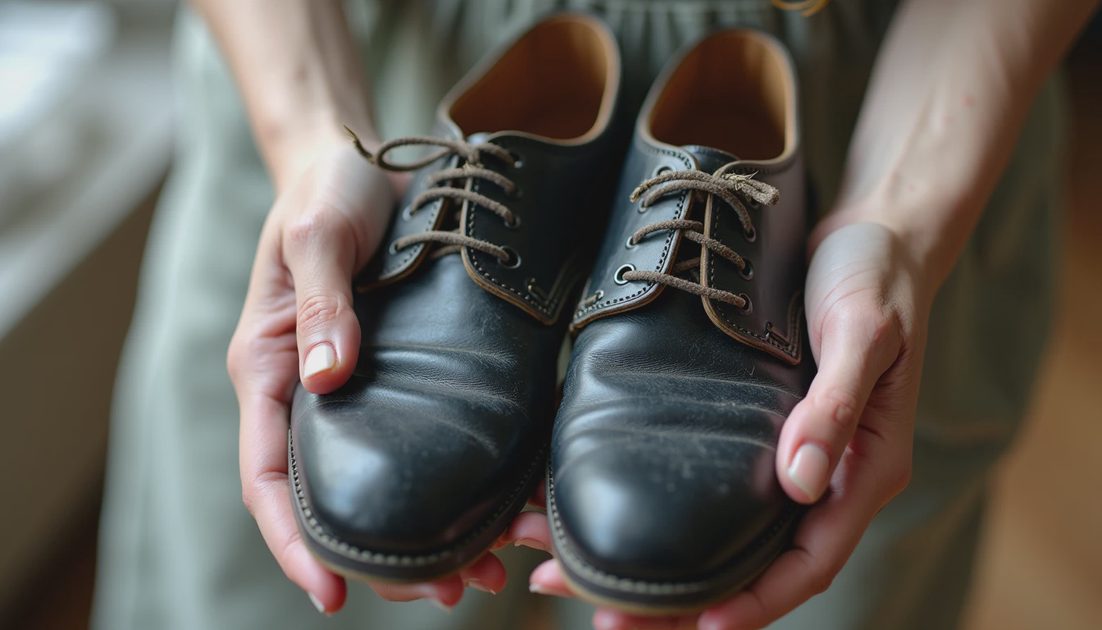
There is a pair of shoes in my closet that I have resoled three times. They are black, or perhaps a very deep charcoal — it is hard to tell now, after years of wear and polish and Brooklyn sidewalks. They are not the shoes I would have chosen during my Vogue years. They are not important, not architectural, not the kind of shoe that gets photographed or complimented or noticed at all. But they are the shoes I reach for when I know the day will be long and the ground will be hard and I will need, by six o'clock, to still feel like a person who has not been fighting her own feet since nine in the morning.
I have spent more money on shoes than I care to calculate — not all of it wisely. The fashion industry taught me early that shoes were to be admired as objects. Sculptural heels, delicate straps, leather so smooth it looked poured. I learned to evaluate a shoe's line, its proportion, its cultural reference. I did not learn, until my body taught me directly, to evaluate a shoe's relationship with the human foot. That education came later, after the blisters and the pinched nerves and the afternoons spent walking blocks through Manhattan with my toes going numb.
What follows is not a guide to the most beautiful shoes I have ever seen. It is a guide to the shoes I actually trust — the ones that have held up across seasons and sidewalks and long, demanding days when everything else felt uncertain. These are the shoes that form the foundation of what I now call my wardrobe anchors: the pieces that do not change from season to season because they do not need to. They simply work, and in a world that is constantly telling women to buy something new, there is a particular kind of peace in wearing something that already works.
What I Learned About Shoes the Hard Way
My education in uncomfortable shoes began early and lasted far too long. At Vogue, the standard was high and the tolerance for visible discomfort was correspondingly low. I wore pointed-toe heels to fashion week presentations where I stood for hours. I wore backless mules that required my toes to grip with every step. I wore boots with soles so thin I could feel every ripple in the pavement. I told myself this was the cost of looking like I belonged in the rooms I had worked so hard to enter.
The cost, as it turned out, was higher than I admitted. Chronic foot pain is not just physical. It is cognitive. When your feet hurt, you think about your feet. You adjust your stride. You look for places to sit. You leave events early. You become, in small but accumulating ways, less present. You are not fully in the conversation because part of your attention is always monitoring the ache, the rub, the blister forming on your heel. Over a career, this adds up to thousands of moments of diverted attention — thousands of small withdrawals from the account of your professional presence.
The physical consequences were also real. I developed a neuroma in my left foot — a thickened nerve between the toes that felt, when it flared, like standing on a pebble that was actually inside my skin. It took a year of wearing only flat, wide-toed shoes for the nerve to calm. A podiatrist in Midtown, a kind woman who had seen this exact injury in hundreds of fashion-industry patients, told me I was lucky it was reversible. Some of her patients, she said, had done permanent damage.
I did not stop loving beautiful shoes. I still notice them, appreciate them, sometimes even photograph them in shop windows. But I stopped wearing shoes that ask my body to do things bodies were not designed to do. I began, instead, to build a small collection of shoes I could trust absolutely. The criteria were simple but strict: the shoe must be wearable for a full day without pain, it must be elegant enough for professional environments, and it must be made well enough to justify resoling rather than replacing.
The Shoe Tests I Perform Before I Commit
Before I describe the shoes I trust, I want to share the tests I use to evaluate any new pair. These are things you can do in a store, before you hand over your credit card — and they will tell you more about a shoe than the brand name or the price tag ever can.
The Evening Test. Never buy shoes in the morning. Your feet swell over the course of the day, particularly if you spend time on them. A shoe that fits comfortably at ten in the morning may be tight by four in the afternoon, and shoes that are even slightly too small will punish you for it across the long arc of a workday. I try on all new shoes in the late afternoon or early evening. If they fit well then, they will fit well at any hour.
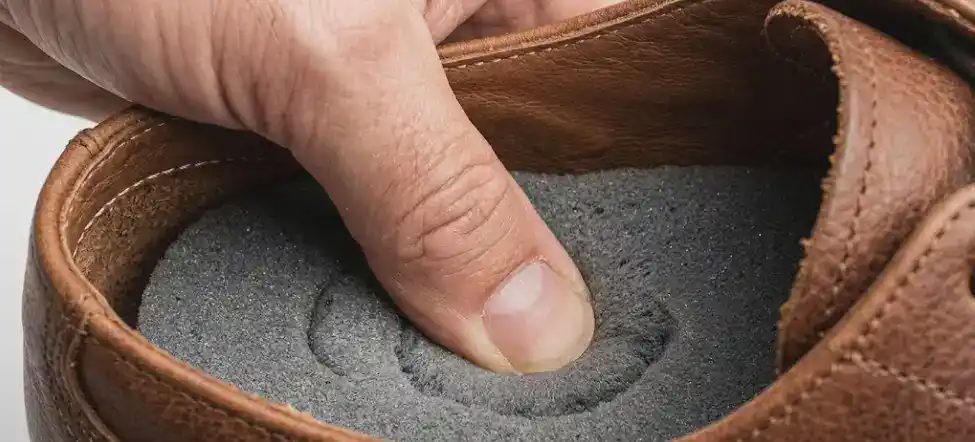
The Cushion Test. Press your thumb firmly into the insole of the shoe. You are looking for material that yields slightly and then returns — a sign of adequate cushioning that will absorb the impact of walking on hard surfaces. Leather-soled dress shoes often have no built-in cushion. I factor in the cost of a rubber sole overlay and a padded insole insert when I consider them. A shoe that cannot accommodate even a thin cushion insert is not a shoe I will wear for a full day.
The Width Test. Remove the insole if possible and stand on it in your bare or stockinged foot. Does any part of your foot spill over the edges? The shoe is too narrow. A shoe that is too narrow compresses the metatarsals — the long bones of the forefoot — and over time this compression can cause neuromas, bunions, and the kind of deep, aching fatigue that makes you want to take your shoes off under your desk. Buy the width that fits your foot, not the width that fits your idea of elegance. No one can see a width size, but everyone can see the way you walk when your feet are in pain.
The Heel Height Calculation. I measure heel height not from the floor but from the difference between heel height and toe-platform height. A shoe with a three-inch heel and a one-inch platform has an effective heel height of two inches — the distance your heel sits above the ball of your foot. That is the number that matters for comfort. I find that anything above a two-inch differential begins, after several hours, to shift my posture in ways that feel like work. For long days, I stay at or below one and a half inches of effective heel height. This is not arbitrary. It reflects the angle at which the Achilles tendon can function without shortening and the pelvis can remain in a neutral position.
The Pavement Test. Walk on a hard floor — tile, wood, concrete — not just on carpet. Carpet absorbs sound and impact, masking thin soles and weak cushioning. A shoe that feels fine on a carpeted fitting-room floor may feel punishing on the concrete sidewalks of a city. I walk small circles, then long strides. I stop suddenly, as if I have seen something in a shop window. I pivot. If the shoe slips at the heel or pinches at the toe during any of these movements, it will not survive a day in my life.
The End-of-Day Removal Test. This is the strangest test, and the most revealing. After I have worn a new pair of shoes for a full day, I pay attention to the moment I take them off. Do I feel a rush of relief? Do my feet ache as blood returns to compressed areas? Or do I barely notice the transition — do my feet feel, at the end of the day, roughly as comfortable as they did at the beginning? A shoe that causes relief upon removal is a shoe that was causing low-grade distress all day, even if I was not consciously aware of it. That is not a shoe I keep.

The Shoes I Trust
With those tests in mind, here are the specific types of shoes that have earned their place in my wardrobe. I do not include brand names lightly, but I share them when my experience has been consistent across multiple pairs and multiple years.
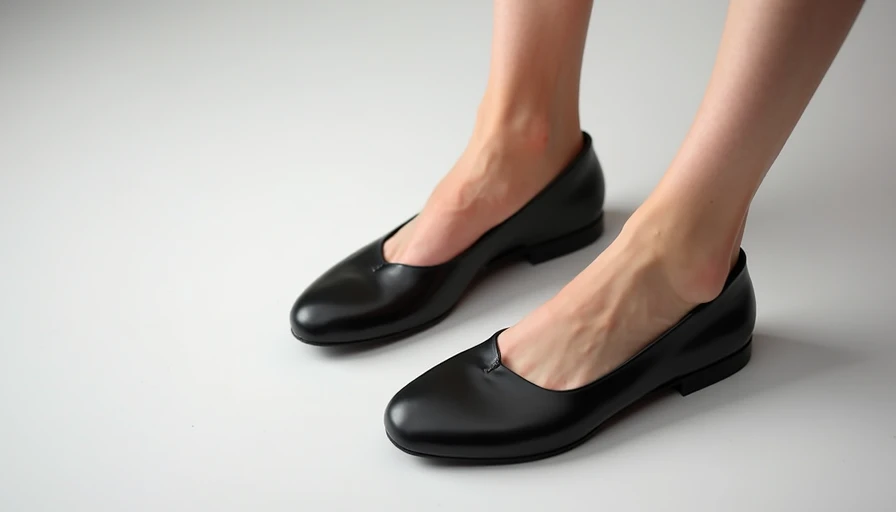
The Refined Ballet Flat. Good ballet flats are harder to find than they should be. Most are too flimsy — thin soles that transmit every pebble, heels that slip, leather that stretches into shapelessness within a season. A good ballet flat has a structured heel counter that does not collapse when you put the shoe on. It has a sole thick enough to insulate you from the ground. It has a toe box that does not crush your metatarsals into a point. It is, ideally, made of leather that breathes and molds to your foot rather than synthetic that traps moisture.
Repetto, the French brand that has been making ballet flats since the 1940s, makes the version I come back to. Their classic flat has a thin but genuine leather sole and a shape that follows the natural line of the foot. They run narrow, which is something to know before you order. For a wider foot, I look to Margaux, a New York brand that makes flats in multiple width options — a feature that should be standard across the industry and is, maddeningly, still rare. Their demi-flat has a slight heel, just enough to cushion the strike of the foot against pavement.
The Low Block-Heel Pump. There are occasions when a flat is not quite right — an evening event, a presentation where you want a little more vertical presence, a meeting where you know everyone else will be in heels. The low block-heel pump is my compromise. The heel is substantial enough to feel stable, not precarious. The height is low enough — typically two inches or slightly under — that the arch does not cramp. The shape is classic enough to move between seasons and years without dating itself.
Sarah Flint, a brand that has made comfort its central selling point without abandoning elegance, makes a pump called the Perfect Pump that is genuinely well-constructed: a wider toe box, an anatomical arch support, and a heel height that does not feel punitive. I bought my pair three years ago and have resoled them once. They have not let me down. For a more accessible price, I have had good experiences with certain Cole Haan pumps, though their quality varies by collection and I recommend the tests above rather than relying on the brand name alone.
The Chelsea Boot. A Chelsea boot is not, at first glance, a quiet confidence shoe. It is fairly utilitarian. But a well-made Chelsea boot in black or dark brown leather does something that heels and flats cannot: it grounds you. The slight weight of the sole connects you to the pavement. The ankle coverage provides a sense of stability. The elastic side panels accommodate slight swelling over the course of a day. The silhouette is clean and sharp and works with trousers, midi skirts, and even some dresses.
I wear a pair from RM Williams, an Australian brand that constructs its boots with a single piece of leather — one seam at the back rather than multiple seams that can rub. They are expensive, and I waited several years before buying them, but the cost-per-wear has dropped to something approaching negligible. A less expensive alternative is the Blundstone Chelsea, which has a slightly more casual profile but can work in creative or relaxed professional environments. For a dressier version that still prioritizes comfort, I have heard consistently good things about the Nisolo Chelsea, though I have not worn them personally long enough to offer a definitive account.
The Refined Loafer. A loafer occupies the space between a flat and a pump — it has more presence than a ballet flat but more ease than a heel. I wear loafers on days when I want to feel pulled together without feeling formal, when I will be walking but also sitting in meetings, when I need my shoes to project competence without demanding attention.
The pair I trust most is from Gucci — the classic horsebit loafer in a soft, matte leather. I hesitated before including this recommendation because the price is considerable and I do not want to suggest that good loafers require a luxury label. They do not. But the specific construction of this loafer — the flexible sole, the generous cut across the ball of the foot, the leather that softens without collapsing — has proven itself across multiple years of wear. For a more accessible alternative, I have been impressed by the loafers from Everlane, which use Italian leather and a flexible sole, and by certain styles from Sézane, though their leather can be stiffer initially and requires a breaking-in period.
The Sandal That Does Not Flap. Summer shoes are a particular challenge for the woman who does not want blisters. A sandal with too many straps creates friction points. A sandal with too few straps requires the toes to grip with every step, which fatigues the foot and alters the gait. A sandal with a hard, flat sole offers no shock absorption for pavement walking.
I wear a simple leather slide from Ancient Greek Sandals, a Greek brand that uses soft, untreated leather and designs that follow the shape of the foot rather than forcing the foot into a shape. The pair I own has two wide straps across the forefoot and a slight cushion at the heel. The leather has darkened over time and molded to the contours of my foot. I have walked miles in these sandals — not stylishly, perhaps, but comfortably, which is its own kind of elegance. For a closed-toe summer shoe, I have worn the same pair of espadrilles from Castañer for four summers now. The wedge is low and the fabric breathes. They are not fashionable in any avant-garde sense, but they have outlasted far trendier shoes that spent their seasons in the back of my closet.
How I Care for the Shoes I Trust
A shoe that can be trusted for years requires care. This is not about vanity. It is about the economics of slow buying — a well-maintained shoe lasts far longer and costs far less over time than a succession of cheaper replacements.
I have my trusted shoes resoled when the sole wears thin, which for a frequently worn pair is typically every eighteen months to two years. I use a cobbler in downtown Brooklyn, a man who has been resoling shoes for forty years and who once told me that most women wait too long. Once the sole wears through to the upper, he explained, the repair becomes more expensive and sometimes impossible. Resole early.
I polish my leather shoes every few months with a neutral cream polish that nourishes the leather without altering the color. I keep cedar shoe trees in the shoes I wear most often — cedar absorbs moisture, maintains the shape of the shoe, and deters the small organisms that can damage leather over time. This sounds precious. It is not precious. It is the same care I give to my cashmere sweaters and my silk shirts, because care is what turns a purchase into an anchor.

The Quiet Anchor at the End of the Day
There is a moment at the end of a long day — after the meetings and the walking and the standing and the thinking, after the train ride home and the climb up the stairs to our apartment — when I step out of my shoes. I have learned to notice this moment. If I feel nothing — no rush of relief, no ache, no sense of my feet expanding into freedom — then the shoes have done their work. They held me for twelve hours, and they did it so well I forgot I was wearing them.
That is what I want from my wardrobe anchors: the quiet miracle of forgetting. I do not want to think about my shoes. I want to think about my work, my ideas, the person I am speaking with, the taste of the coffee I am drinking, the color of the sky outside the window. Shoes that let me forget them are shoes that return me to myself. They do not ask for my attention. They do not extract a tax in discomfort. They simply carry me through the day and let me arrive, at the end of it, still whole.
Dress for the life you are gently returning to.