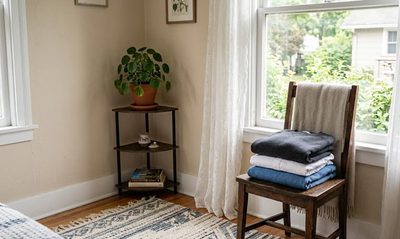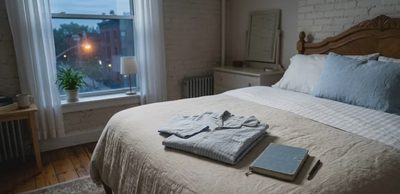


There is a walk I take most mornings. It begins at the front door of our apartment in Carroll Gardens, turns onto a street lined with sycamores, and ends at a small Italian coffee bar three blocks away where they know my order. If the morning is willing, it continues through Cobble Hill to the Promenade, where the water becomes visible and the city becomes something you can look at rather than something you are inside.
I began this walk during the months after I left Vogue, when leaving the apartment at all required deliberate intention. The work of burnout recovery was largely interior and invisible. But this walk was exterior. It was, for a long time, the only part of my day that required me to get dressed.

In recovery from burnout, the smallest decisions carry
disproportionate weight. What to eat. Whether to open the curtains. Whether to get dressed at all. The question of what to wear is not about fashion. It is about whether you are still in a relationship with your own life — whether you are still making choices about how you inhabit your days, or whether you have ceded that territory to exhaustion.
Getting dressed, in the early months of my recovery, was a small daily act of self-authorship. The outfit I developed across those mornings became one of the more reliable anchors of that period. It is still, two years later, what I reach for when I need to go outside and be held gently by what I am wearing.
The foundation: trousers in heavyweight cotton twill, the color of old bone. Wide-leg, with a waistband that sits at the natural waist without digging or shifting. They fall cleanly from the hip and require no belt. They have softened in the wash into something even better than they were new. The quality I look for is considered ease — a cut designed around a moving body, not a trend direction.
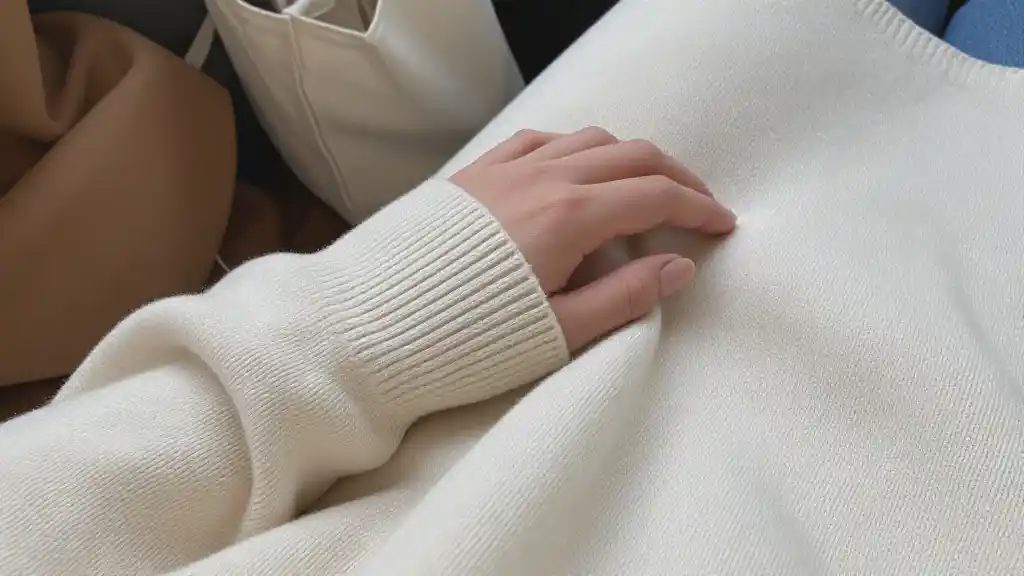
The middle layer: a vintage ivory cotton sweater I found for seven dollars. Loosely knit, washed many times, with a neck wide enough to feel generous. It is neither fitted nor oversized. It has no ambition. It is not trying to be anything other than what it is — a soft, honest sweater that makes the body feel comfortable and, in some way I find difficult to articulate, seen. That quality — of a garment that makes you feel seen rather than displayed — is what I now want from everything I wear on a morning walk.
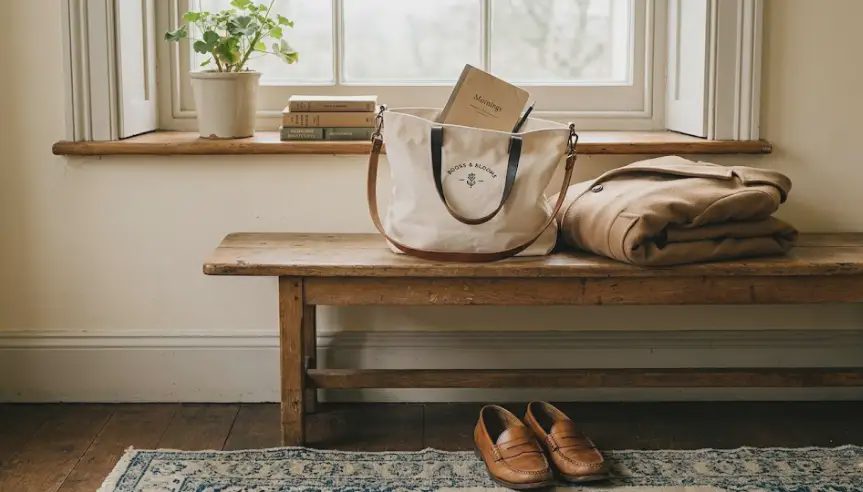
The outer layer: a camel wool-blend wrap coat. No buttons, no structural rigidity — it ties at the waist with a fabric belt. It moves when I move. It wraps around me in a way that is, on the mornings when I most need it, something closer to comfort than coverage. A coat for this walk must feel like company rather than armor.
The shoes: low leather loafers in tan, and a pair of clean leather sneakers. The shoes took the longest to resolve, because shoes were where I had the most accumulated history — the heels that communicated seriousness, the flats that communicated ease, the boots that communicated a specific kind of cool that had very little to do with me. What I arrived at: shoes with no ambition beyond their function, with soles flexible enough for an hour of walking on uneven Brooklyn pavement.
The bag: a medium canvas tote from a market in Lisbon. It holds a notebook, my phone, and occasionally a book I do not read because the walk takes the place of reading. It has a small ink stain I have decided to regard as character. The point: the bag you carry on a healing walk should make you feel unencumbered.
This outfit is not a style statement. It is a set of physical conditions that remove friction — the friction of fabric that pulls, of waistbands that dig, of shoes that demand negotiation with the ground. In a period of life where the interior work generates enough friction of its own, removing it from the exterior is not a small thing.
This outfit is not a style statement. It is a set of physical conditions that remove friction — the friction of fabric that pulls, of waistbands that dig, of shoes that demand negotiation with the ground. In a period of life where the interior work generates enough friction of its own, removing it from the exterior is not a small thing.
The overall effect: a woman who has made considered choices and is finished thinking about them. Who is present, now, for the walk.
Dress for the life you are gently returning to.