
There is a particular moment in the evening that I have come to love more than almost any other.
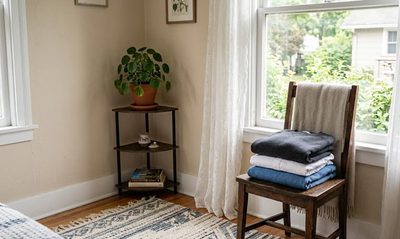
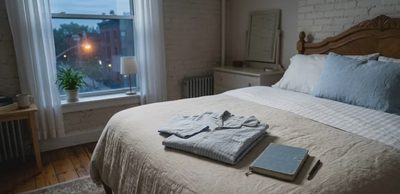
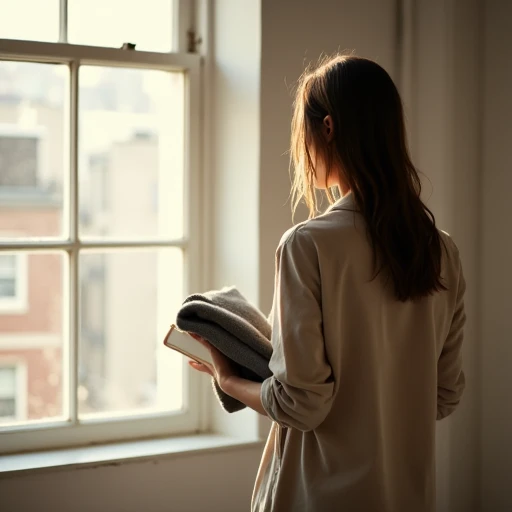
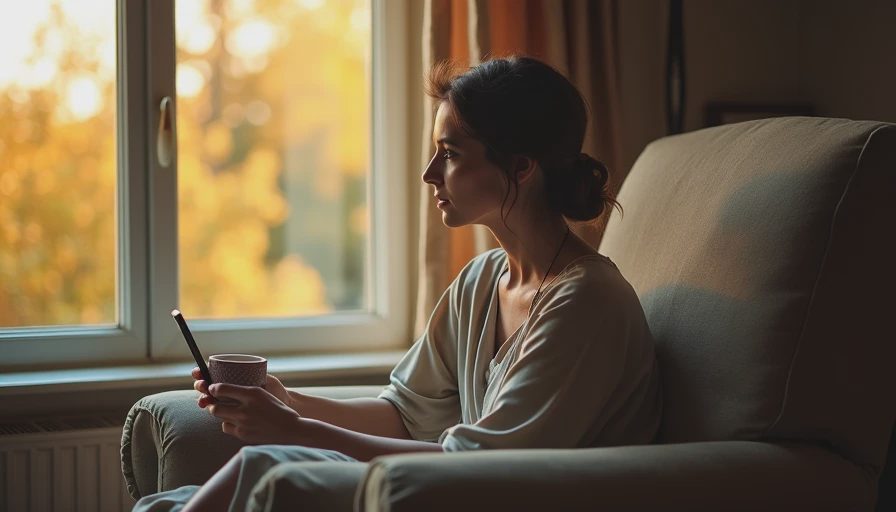
It happens sometime between six and seven, after the last email has been sent and before dinner is properly started. My husband is usually reading in the other room, or he is in the kitchen doing something unhurried with olive oil and whatever we picked up at the market. The light in our Brooklyn apartment has gone the color of weak tea — that specific early-evening gold that exists only in the hour before you have to turn on lamps.
And I change my clothes.
Not into pajamas. Not into something I would describe, with any accuracy, as loungewear. I change into what I have come to think of, with complete sincerity and zero irony, as my house dress. A soft, considered garment that is worn exclusively inside these walls, seen almost entirely by my husband and myself and occasionally by the woman across the courtyard who I suspect keeps similar hours.
It is one of the small rituals that saved me. And I want to tell you about it.
What the Fashion Industry Never Taught Me About Getting Dressed
I spent five years in one of the most visually sophisticated editorial environments in the world, and in all of that time — through all of those shoots and market appointments and runway reviews and meetings where the emotional temperature of a room could be read entirely through the clothes people had chosen that morning — nobody ever talked seriously about what you wore at home.
It was understood, implicitly, that home was where the performance paused. That the beautiful, considered, intentional relationship with clothing that we cultivated so carefully for public life was simply suspended the moment you crossed your own threshold. You wore whatever. A stretched-out t-shirt. Something comfortable that you didn't care about. The absence of thought, as a kind of relief.
I practiced this for years without questioning it. I poured enormous creative energy into dressing for every room except the most important one — the room where I actually lived, actually rested, actually became myself again after whatever the day had required of me.
It took burning out completely to understand what I had been missing.
When I left Vogue in 2023 and began the slow, non-linear process of rebuilding a life that felt genuinely mine, I found myself spending more hours at home than I had in years. And I noticed, with some discomfort, that I had no language for how to inhabit those hours beautifully. I knew how to dress for a meeting. I knew how to dress for a dinner where I would be seen by people whose opinions I had assigned weight to. I did not know how to dress for a quiet Tuesday evening that belonged entirely to me.
That ignorance, I eventually understood, was not a small thing. It was a symptom of how completely I had outsourced my sense of beauty to external spaces and external audiences. The house dress became, unexpectedly, a form of reclamation.
What a House Dress Actually Is
Let me be specific, because I think the concept deserves precision rather than sentiment.
A house dress is not a nightgown. It is not sleepwear, though the line between the two can be beautifully blurred if you choose well. It is not a bathrobe or a caftan or a "cozy set" or any of the other categories that luxury loungewear marketing tends to collapse together in ways that obscure more than they clarify.
A house dress is a garment designed to be worn awake, at home, during the hours that are yours. It is comfortable in the truest sense of the word — not just physically easy, but emotionally compatible with rest, with slowness, with the version of yourself that exists without an audience. And it is beautiful, because beauty at home is not a luxury or an indulgence. It is a practice of self-regard that I now consider essential.
The specific form it takes is less important than the intention behind it. For me, it is currently a long cotton voile dress in a washed sage green — loose through the body, with wide sleeves and a neckline that is neither formal nor sloppy, bought from a small French brand that makes exactly this kind of garment and nothing else.
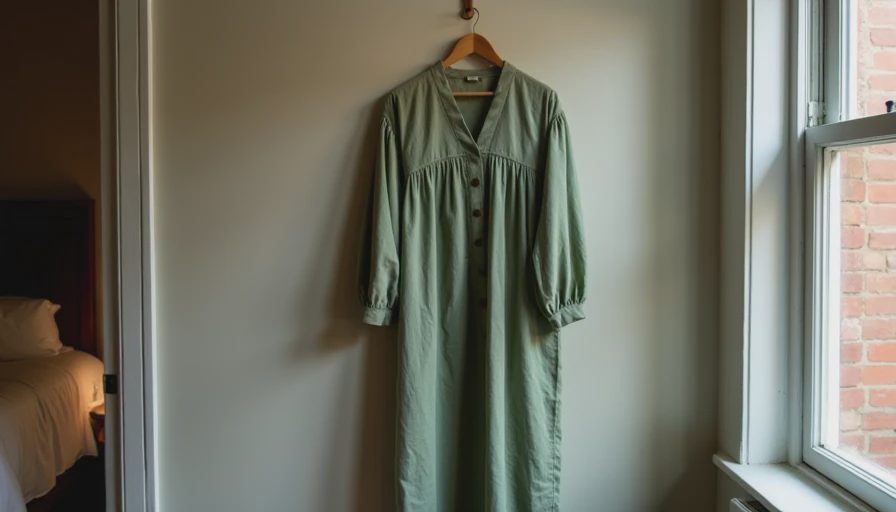
Before that, it was a silk charmeuse robe-style dress in deep ivory that I wore until the fabric began to speak in the particular language of well-loved things.
For you, it might be something entirely different. The principle is not the silhouette. The principle is that it is chosen. That it is beautiful by your own definition. That it was purchased with the same consideration you would give to something you intended to wear in public — because you are worth that consideration, even when no one is watching.
On Evening Rituals, and Why Clothing Belongs in Them
My husband has a phrase he returns to often: that life is like tending flowers, that it needs watering every day. I think about this most in the evenings, which are the hours I have come to understand as the real infrastructure of a meaningful daily life.
Morning rituals are well-documented — the meditation, the journaling, the careful breakfast, the slow coffee. Slow living content is full of mornings. But evenings are where the day is actually processed, where the accumulated weight of everything you have carried is either set down thoughtfully or dragged into sleep and carried further.
The simple act of changing into something beautiful and comfortable at the end of a working day is a ritual of transition — a physical marker between the self who was productive and visible and accountable, and the self who is allowed to simply be. It takes thirty seconds. It costs nothing beyond the initial investment of the garment. And it works with a consistency that continues to surprise me, even two years in.
I change into my house dress. I put on something quiet on the record player. I start whatever is happening in the kitchen, or I sit with a book, or I take the long way around the block before dinner. My notebook is on the bedside table, waiting for its one sentence of gratitude before I sleep. The evening has a shape now, and clothing is part of how I mark its beginning.
This is not a self-care cliché. It is not a wellness routine or a productivity hack. It is simply a woman who learned, later than she would have liked, that the hours at home deserve the same quality of attention as the hours in public — and that dressing for them is one of the most direct ways to offer that attention.
The Fabric Questions Worth Asking
Because I cannot help being practical, and because I think beautiful house dress style is genuinely achievable without a significant budget if you know what you are looking for, let me say something about materials.
Cotton voile and cotton lawn are my first recommendations for anyone who lives in a home that runs warm, or who, like me, finds heavier fabrics oppressive in the hours before sleep. They are light enough to feel effortless but substantial enough to drape with genuine elegance. They launder beautifully and soften with every wash in a way that feels like the garment is meeting you halfway over time.
Silk and silk charmeuse are the elevated option, and I will defend the investment earnestly. A silk house dress worn regularly will last years, will improve with careful handling, and will provide a sensory experience — the particular cool weight of it against the skin — that no synthetic approximation has ever matched in my experience. If budget is a consideration, look for deadstock silk sellers online, or consider the secondhand market for Japanese silk robes and dresses, where the quality is often extraordinary and the prices are honest.
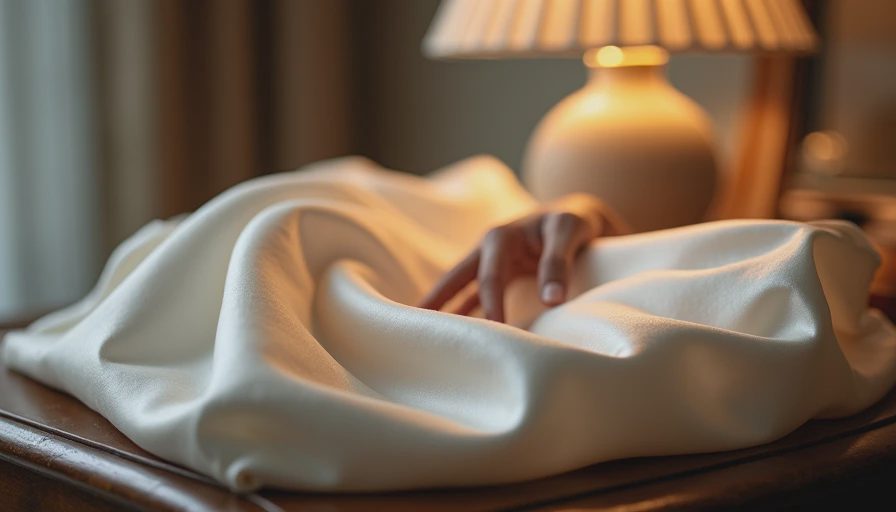
Washed linen for the women who love texture and don't mind a garment that asks to be ironed occasionally. Linen at home has a particular beauty — it is unpretentious and warm and real, and it ages in a way that feels like character rather than deterioration.
What I would gently steer you away from: anything with elastic waistbands that dig, synthetic fabrics that trap heat, or anything that was clearly designed to be seen on a phone screen rather than lived in. Sleepwear for women that photographs beautifully but feels uncomfortable is a very well-funded category, and you deserve better than it.
On Wearing Beauty for Yourself
I want to stay here for a moment, because I think it is the most important thing I have to say.
There is a version of this essay that could be written — and often is, in spaces I no longer visit — that frames the house dress as something you wear for your partner. A way to maintain mystery, to remain appealing, to perform femininity inside the domestic space for an audience of one.
That is not what I am talking about.
I wear my house dress for myself. Entirely, completely, without apology, for myself.
My husband notices, occasionally, and says something kind, and I am glad of it. But that gladness is a small bonus appended to a much larger and more foundational truth: that I dress beautifully at home because I live here. Because these rooms, this evening light, this particular hour before dinner — these are the primary hours of my actual life, not the supporting hours that exist between the real ones.
The fashion industry, for all of its genuine beauty and creative intelligence, spent years teaching me that clothing mattered most when it was witnessed by others. That the gaze was the point. That beauty required an audience to be real.
I no longer believe this. And the house dress is, among other things, a daily practice of not believing it.
A Small Invitation
If you are someone who has, until now, reserved your most considered dressing for public life — who has a wardrobe full of pieces chosen carefully for work and social occasions and almost nothing chosen carefully for home — I want to offer you a gentle suggestion.
Not a capsule wardrobe overhaul. Not a shopping list. Simply this:
Find one thing to wear at home that is beautiful by your own definition. That feels like something, against your skin. That you would choose, not simply reach for. That was purchased with the consideration you would give to something worn in public.
Put it on this evening, sometime between six and seven, when the light goes that particular color of weak tea. Make yourself a cup of something warm. Notice whether the evening feels different.
It may not change everything. But in my experience, it changes enough.
Dress for the life you are gently returning to. Even — especially — when that life is lived entirely at home.