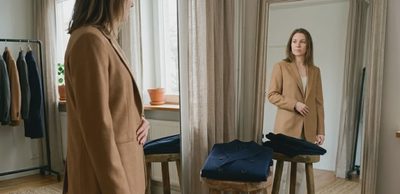


I once believed that power had a uniform. A sharp black blazer. A structured shoulder. A heel that announced your arrival before your voice could. I learned this language inside the fashion industry, where women in senior positions wore authority like a second skin — polished, precise, and slightly impenetrable. I admired them. I emulated them. I filled my closet with the armor I thought I needed, and for a long time, I didn't question it.
But armor, I eventually learned, carries a cost. It protects, yes — but it also weighs. It separates. It keeps people at a distance, and it can keep you at a distance from yourself.
The shift began quietly, during my burnout recovery. When I left Vogue in 2023, I stopped needing to prove myself to anyone, and in that unexpected freedom, my relationship with power began to change. I started noticing the women who commanded rooms not with volume, but with stillness. The ones who led meetings in soft knitwear and flat leather shoes, whose authority didn't need to announce itself because it was already felt. These women had something I had never been taught to see: soft power.
Soft power dressing is not about looking soft in a way that diminishes you. It is about choosing clothes that allow you to remain present — in your body, in the room, in the conversation — without the physical tension that traditional power dressing so often demands. It is the difference between clenching and holding steady.

From my design training, I know that a garment communicates before you speak. A jacket with a rigid shoulder pad sends a message: I am prepared for impact. A jacket with a softly tailored, natural shoulder sends a different one: I am here, fully, and I am not afraid. Both have power. But only one leaves room for breath.
This is not an argument against professionalism. It is an argument for a broader definition of it. You can lead a boardroom in a merino wool cardigan if the cardigan fits beautifully and you wear it with the calm assurance of someone who knows exactly what she brings to the table. You can negotiate a contract in flat leather loafers if your voice doesn't waver and your preparation is unshakable. What makes an outfit powerful is not its volume or its cost. It is the alignment between how you appear and how you feel.
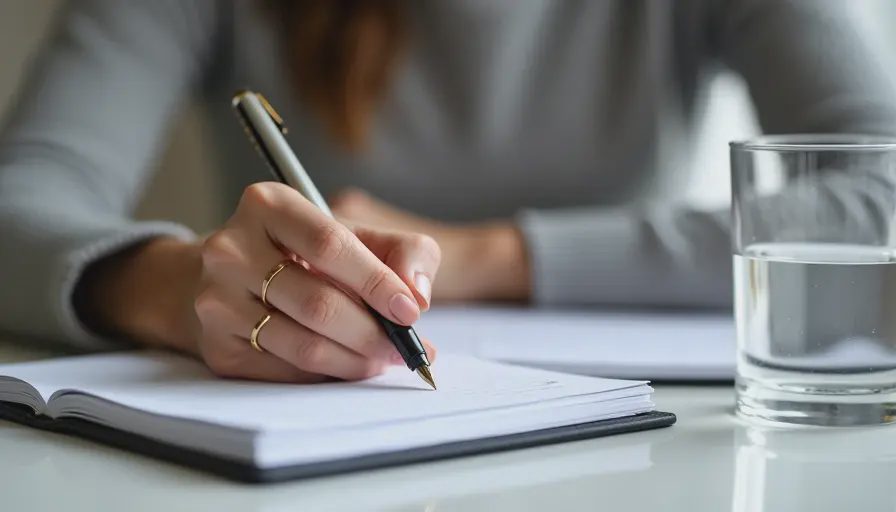
To dress with soft power is to trust that your competence does not require a costume. It is to believe that you can be both gentle and formidable, both warm and decisive. In my own life, I have found that the clothes I lead in now — a fluid silk-crepe blouse, a perfectly cut wool coat, trousers that move with my body rather than constraining it — allow me to access a kind of authority I never felt in armor. They leave my nervous system calm. They leave my mind clear. They let me focus on what actually matters: the work, the people, the moment.
I no longer want to lead from behind a shield. I want to lead with my face open, my shoulders dropped, my voice steady. My husband tells me that life is like tending flowers: it needs watering every day. Soft power dressing is one way I tend myself — a daily practice of choosing presence over armor, trust over performance. It is, in its quietest form, a leadership that doesn't harden the woman who wields it.
Dress for the life you are gently returning to.