
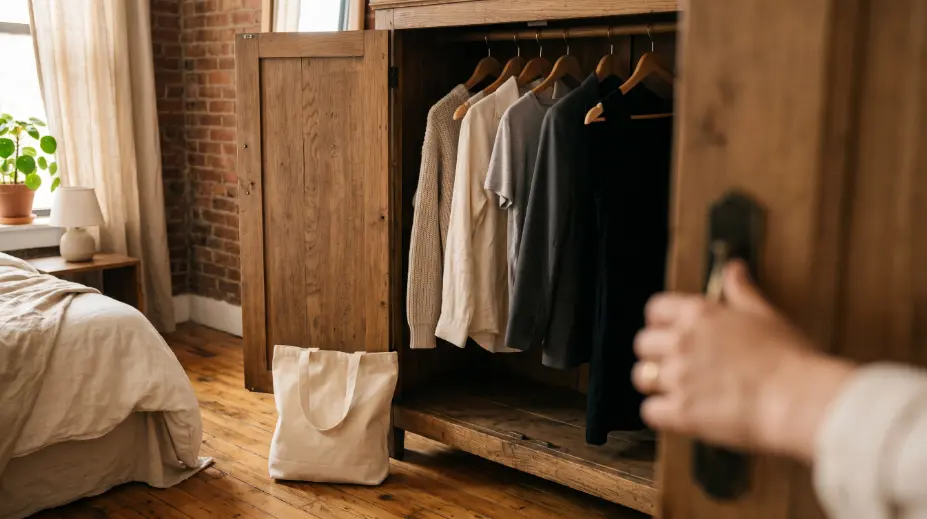

The idea came to me in late September, standing in front of my closet with a familiar, low-grade dissatisfaction. I had just left my job at Vogue. I was living in a quieter version of my life — slower mornings, fewer events, no one photographing what I wore. And yet the reflex was still there: a small, insistent whisper that I needed something new. A sweater in the right shade of camel. A pair of trousers that fit better than the ones I already owned. Something — anything — that would make getting dressed feel fresh again.
I recognized this whisper. I had been hearing it for years. It was the voice of an industry that runs on newness, but it had become so internalized that I no longer needed the industry to prompt me. I could do it entirely on my own.
So I made a decision, not out of discipline but out of curiosity: I would buy nothing for the entire autumn. No sweaters. No coats. No shoes. No silk blouses for a dinner that did not exist. Three months. Just me and the clothes I already owned.
What followed was not what I expected.
The First Weeks: The Urge That Would Not Quiet
The first two weeks were the hardest, which surprised me. I had assumed that leaving fashion meant leaving the constant desire for new things behind. I was wrong. The urge to shop was not purely professional. It was personal, habitual, and deeply woven into how I processed stress, boredom, and the small empty spaces of my days.
I noticed, for the first time, how often I opened shopping apps without thinking. How my thumb moved toward the bookmarks folder where I kept links to sweaters I was “considering.” How I would see a woman on the street wearing a beautiful coat and feel the immediate, almost physical pull toward acquisition — a pull that had nothing to do with the coat itself and everything to do with the momentary discomfort of wanting something I did not have.
In those early weeks, I did not feel liberated. I felt restless. I had removed a coping mechanism, and what rushed into the space it left behind was an unfamiliar anxiety. Without the ability to buy something, however small, I had to sit with my own restlessness. I had to ask myself what I was really reaching for when I reached for a new sweater. The answer was rarely about the sweater. It was about feeling enough, feeling current, feeling in control. Shopping had been giving me a brief, illusory sense of all three.
I began taking walks instead. Long ones, through the sycamore-lined streets of Cobble Hill, past the coffee bar, all the way to the Promenade. The walks did not solve anything, but they gave the restlessness somewhere to go.
What I Found When I Stopped Looking Outside
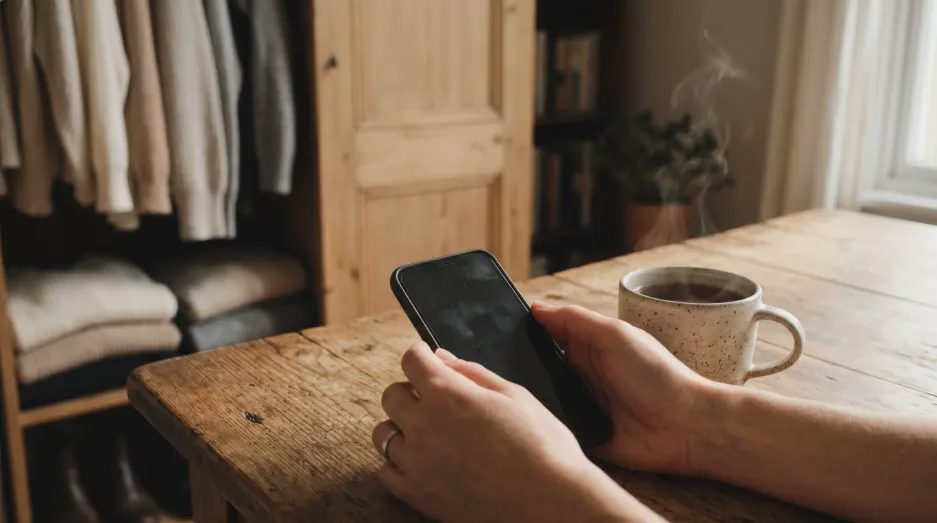
Around week four, something shifted. The initial agitation faded, and in its place came something quieter — a kind of slow, tentative curiosity about what was already hanging in my closet.
I had been so focused on what I didn't have that I had stopped seeing what I did. A pair of charcoal wool trousers I had worn exactly twice in three years. A grey cashmere crewneck with a small mend near the cuff, forgotten because it wasn't new. A silk blouse in a shade of deep navy that I had bought on a whim and never quite knew how to style. These pieces were not insufficient. They were simply invisible, crowded out by the constant noise of what I might buy next.
Without the distraction of new arrivals, I began to dress differently. I started reaching for the grey cashmere not because it was the default but because I had time to notice how beautifully it fell from the shoulder. I wore the charcoal trousers to a dinner and realized they fit better than any pair I had considered purchasing online. I built outfits slowly, in the morning quiet, without the pressure of needing them to feel novel. They felt, instead, like mine.
This was the revelation I had not anticipated: my wardrobe was already enough. It was not perfect, and it was not complete, but it was enough. The problem had never been a lack of clothing. The problem had been a lack of attention.

The One Thing I Bought at the End
December arrived. The experiment ended. And I want to be honest about this: I did buy one thing.
It was a coat — a long, deep olive wool coat that I found in a small shop in our neighborhood in late December. I did not buy it quickly. I visited it three times over the course of two weeks. I touched the fabric. I tried it on and walked around the store. I asked myself whether it would serve my life or just decorate it. I asked myself whether I would still want it in January, in February, in the grey slush of a Brooklyn winter.
The wanting held. It was not urgent. It was not compensatory. It was quiet and steady, the way real desire feels when it is yours and not the algorithm's.
That coat is now one of the most-worn pieces in my wardrobe. Every time I put it on, I am reminded of what that autumn taught me: the goal is not to never want anything again. The goal is to want clearly, slowly, and from a place of sufficiency rather than lack. A season without shopping did not make me immune to desire. It made me capable of recognizing which desires were actually mine.
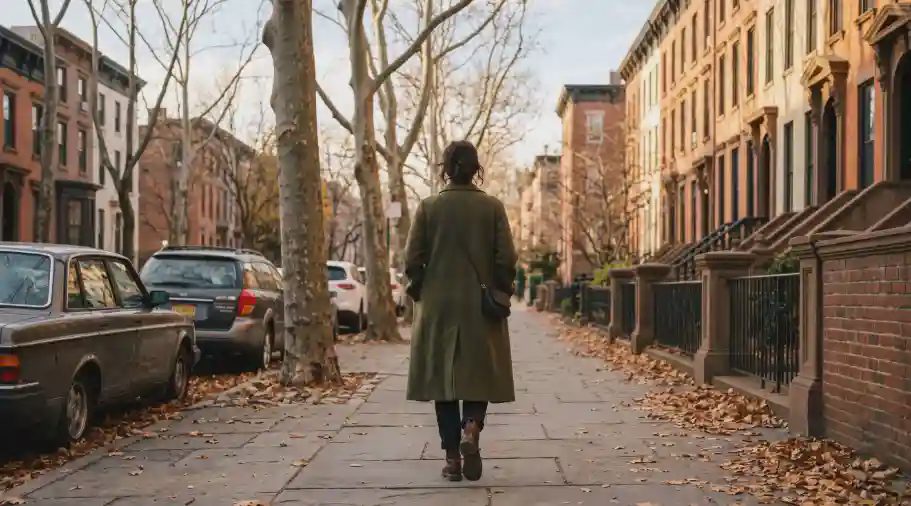
When I look back on that autumn, I don't think of it as a period of deprivation. I think of it as the season I finally stopped running. The constant acquisition of new clothes had been a way of chasing a version of myself I could never quite reach — more polished, more current, more complete. But the woman I was already, the one standing in her Brooklyn apartment with a closet full of good things she had forgotten to notice, was complete enough. She just needed a little quiet to see it.
My husband tells me that life is like tending flowers: it needs watering every day. A season without shopping was a form of watering — not the wardrobe itself, but the attention I paid to it. That attention, I have come to believe, is the real luxury. And it does not require a single new thing.
Dress for the life you are gently returning to.