There is a particular kind of exhaustion that doesn't show up on your face right away.
It hides behind good posture. It tucks itself neatly beneath a well-cut blazer. It learns to smile at industry events and speak fluently in the language of "exciting opportunities" and "the next big season." For years, mine hid so well that I didn't recognize it until the morning I sat at my desk inside Vogue's Los Angeles office, stared at a mood board I had spent fourteen hours building, and felt absolutely nothing.
Not pride. Not creative hunger. Not even the low simmer of deadline anxiety I had come to mistake for passion.
Nothing.
That was the beginning of the end — or, as I understand it now, the beginning of something much more honest.
The Life I Had Fought So Hard to Enter
I want to be careful here, because I am not interested in performing disillusionment for relatability. The truth is more complicated than that.
I loved fashion. I still do.
I loved it the way you love a language you taught yourself — with discipline, with devotion, with the particular pride of someone who wasn't supposed to belong. I grew up in a household where clothes were practical, not poetic. Nobody handed me a career in fashion. I studied design, I built a portfolio on nights and weekends, I submitted to the same editorial positions three and four times before anyone said yes.
When I finally walked into that Los Angeles office for the first time — the particular quality of light, the deliberate silence, the way even the air felt curated — I understood that I had arrived somewhere I had earned.
And then I spent five years slowly disappearing inside it.
This is what the former Vogue editor stories rarely tell you: the work itself can be extraordinary and the environment can still erode you. The two things coexist. You can be genuinely talented and still find yourself shrinking to fit a room that was never quite designed for your dimensions.
What Perfectionism in Fashion Actually Costs
In the fashion editorial world, perfectionism is not a personality quirk. It is a professional currency.
You trade in it every day — the caption revised twelve times, the shoot rescheduled because the light wasn't right, the meeting where someone dismantled a month of your work in forty-five seconds and you smiled and took notes because that is what you do. You learn to hold impossibly high standards not just for your work, but for yourself: your clothes, your opinions, your emotional reactions, the speed at which you recover from failure.
Perfectionism recovery, I now believe, begins with recognizing that perfectionism was never really about quality. It was about safety.
If everything I produced was flawless, nothing could be used against me. If I worked harder than anyone else, I couldn't be dismissed. If I dressed exactly right for every occasion, I would belong. This is the internal mathematics of burnout: you keep raising the stakes of your own performance until the performance is all that remains of you.
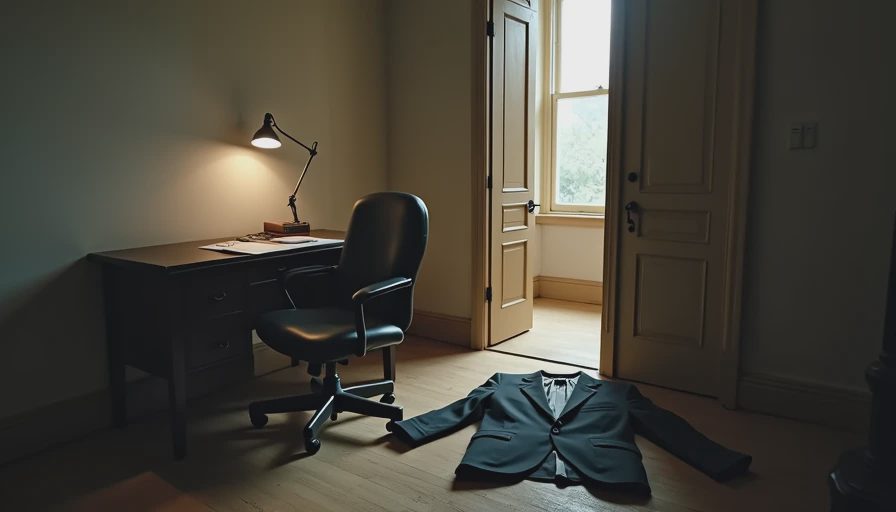
By my fourth year, I had stopped asking myself what I wanted to wear in the morning. I dressed for armor. I dressed for the room I was walking into, for the approval I was chasing, for the version of myself that other people found most useful.
The slow fashion philosophy I write about now didn't come from a book or a trend cycle. It came from finally asking a question I had been afraid to ask for years: Who am I actually dressing for?
The Morning Everything Shifted
I left Vogue in 2023. I did not leave dramatically. There was no confrontation, no righteous resignation letter, no clean narrative arc. I simply reached a point where continuing required a kind of self-abandonment I was no longer willing to practice.
My husband, who is a quieter and wiser person than I am, said something around that time that I have written in my notebook at least a dozen times since: Life is like tending flowers. It needs watering every day.
I had not been watering anything. I had been optimizing everything.
The first weeks after I left were disorienting in a way I hadn't anticipated. I had structured my entire identity around the fashion editorial career I'd built — the access, the authority, the industry insider knowledge, the sense that I was at the center of something that mattered. Without those coordinates, I didn't know how to orient myself in the morning.
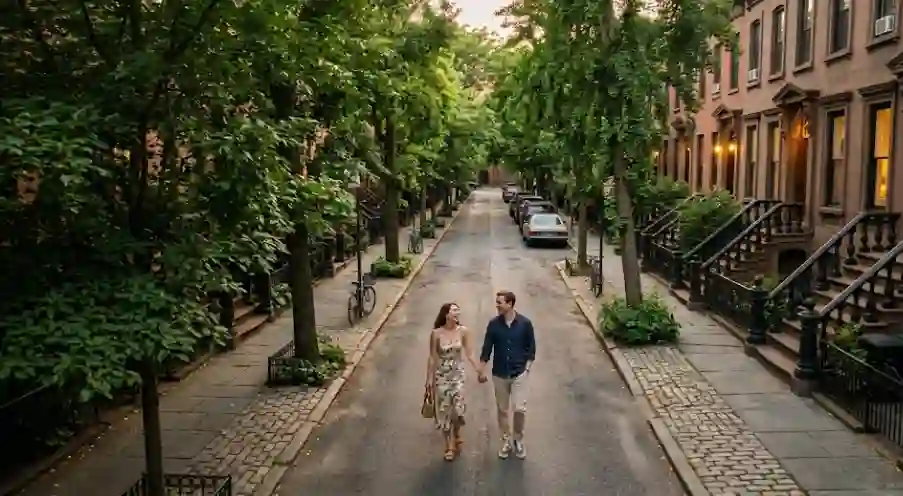
I started walking. Long walks through Brooklyn with no destination, no podcast, no productivity. I cooked dinner slowly. I bought fresh flowers — not for a shoot, not for an occasion, just because they were there and beautiful and temporary in a way that felt honest. I began keeping a small notebook by my bed and writing one sentence of gratitude before I slept.
These were not revolutionary acts. But they were real ones.
What I Learned About Fashion By Stepping Back From It
Here is the paradox I didn't expect: leaving the fashion industry gave me a clearer understanding of fashion than I had ever had inside it.
When you are inside the machine, you cannot see the machine. You can only see the output — the deadlines, the trend reports, the endless conversation about what is next, what is relevant, what is over. The industry runs on manufactured urgency, and when you live inside that urgency long enough, you begin to believe it is the natural rhythm of the world.
It is not.
Slow living essays and slow fashion philosophy share the same foundation: the belief that attention is more valuable than acceleration.
What I know now — from a decade of professional experience and two years of deliberate unlearning — is that the most beautiful wardrobes I have ever encountered were not the largest or the most current. They were the most considered. They were built by women who had developed a genuine relationship with their own bodies, their own lives, and the specific textures of their ordinary days.
A woman who knows that she always feels more herself in something with a collar. A woman who has identified the three colors that ask nothing of her. A woman who keeps one silk blouse she has worn for eleven years because it has traveled with her through enough life to carry actual meaning.
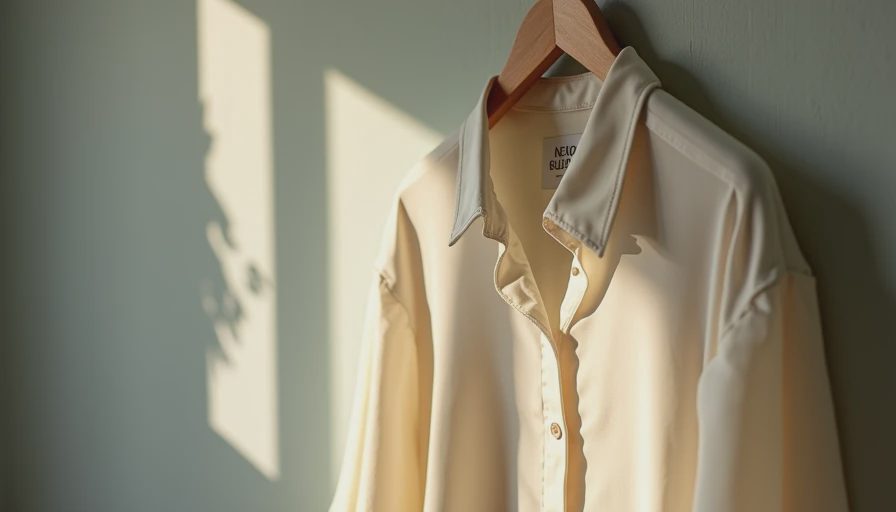
That is not minimalism as aesthetic. That is emotionally intelligent dressing — and it is something you cannot purchase in a haul, manufacture from a trend report, or perform your way into.
On Burnout in the Fashion Industry: What I Wish Someone Had Said
If you are currently somewhere I used to be — overworked, overstimulated, performing competence while quietly unraveling — I want to say something to you directly.
Leaving is not failure. Slowing down is not defeat. Choosing a quieter life does not mean abandoning your standards. It may mean finally applying them to yourself.
Burnout in the fashion industry is particularly insidious because the industry is so visually fluent in the language of aspiration. Everything looks beautiful. The shows are beautiful. The clothes are beautiful. The Instagram grids of your colleagues are beautiful. And you learn to maintain the appearance of beauty even when the interior has gone completely dark.
I am not writing this blog to convince you to leave your career, or to romanticize my own exit. I am writing it because I spent years looking for writing about fashion that didn't make me feel either shallow for caring about clothes or naive for wanting a life that was about more than clothes. I couldn't find it. So I am building it here.
Dress for the Life You Are Gently Returning To
My approach to fashion now begins in a different place than it used to.
Not: What does this season require?
But: What does my actual life require — and what do I want to bring beauty to within it?
I write about quiet luxury not as a price point, but as a practice. I write about building a burnout recovery wardrobe — not the dramatic capsule wardrobe overhaul that self-improvement content promises, but the slower, more honest process of rediscovering what you actually love when you are no longer dressing for a performance.
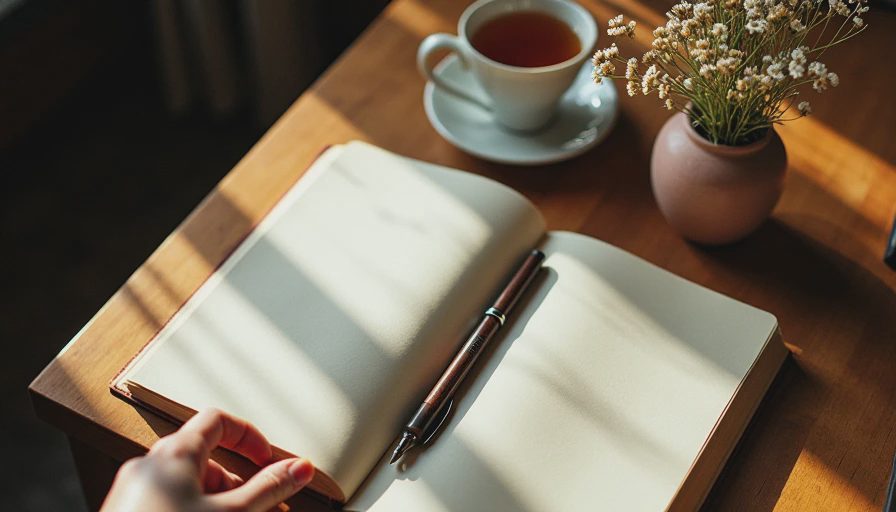
I write about the emotional weight of clothing — the pieces we keep because they hold memories, the pieces we discard because they hold someone else's expectations, and the difficult, worthwhile work of learning the difference.
I write all of this from Brooklyn, in a quiet apartment with fresh flowers on the table and linen that is slightly wrinkled because I have decided that slightly wrinkled linen is one of the most honest textures I know.
I write it as someone who spent a decade inside one of the most prestigious fashion institutions in the world, and who left — not because fashion stopped mattering, but because I finally started to.
Dress for the life you are gently returning to.