
I want to begin with a confession.
The first time I held a Loro Piana cashmere sweater — really held it, in a fitting room, with the particular quality of attention you develop after years of handling samples in editorial — I understood, with absolute physical certainty, that I had been wearing the wrong things for most of my adult life.
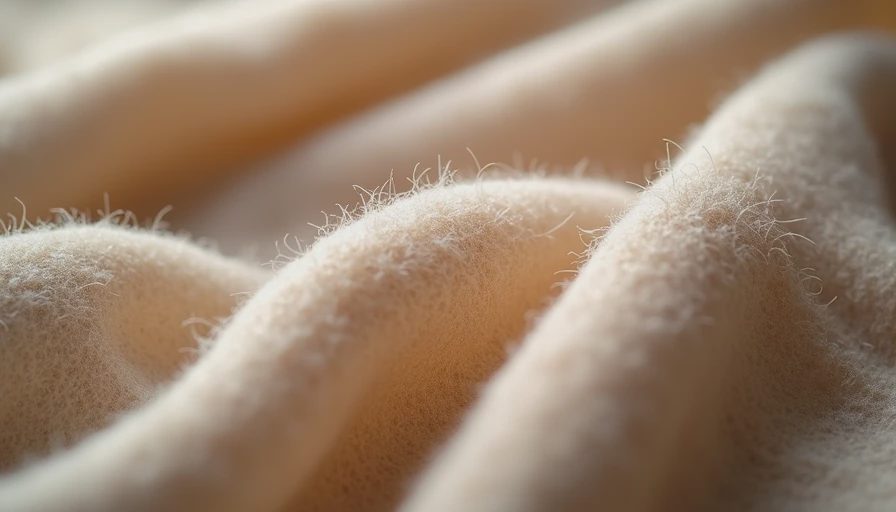
Not wrong in any moral sense. Wrong in the way that a blurred photograph is wrong: technically present, but missing something essential. The Loro Piana was clear in a way I hadn't known fabric could be. It had a weight and a warmth and a softness that didn't perform or announce itself. It simply was what it was, completely and without apology.
I put it back on the shelf and walked out of the store. I wasn't ready for it yet — financially, but more importantly, philosophically. I hadn't yet developed the slow buying framework that would allow me to make that kind of purchase with genuine confidence rather than anxious desire.
A few years later, I bought it. And I have worn it more than almost anything else I own.
This essay is about how to think through that kind of decision — specifically, the question I am asked more than almost any other: Loro Piana or Brunello Cucinelli? Which one first?
Why This Question Matters More Than It Might Seem
On the surface, this looks like a luxury brand comparison. And there is genuine practical value in comparing these two houses — their materials, their construction, their price-to-quality ratios, the way each wears and ages across years of real use.
But underneath the surface, the question is almost always about something larger. It is asked by women who are beginning to think differently about how they shop — who are moving, sometimes tentatively, sometimes after a significant life shift, toward a slow fashion mindset that prioritizes fewer, better things over the continuous accumulation of things that are almost right.
It is asked by women who have looked at their wardrobes and felt a particular kind of quiet dissatisfaction — not at any single piece, but at the aggregate. All of this, and nothing that feels genuinely mine. All of this spending, and almost nothing that brings actual calm.
If that is where you are, I want you to know that the answer to your question is not simply "buy the Loro Piana" or "start with Brunello Cucinelli." The answer begins with understanding what you are actually buying, and why, and whether this particular moment is the right one to buy it at all.
That is what Slow Buying Notes is for. So let's do this properly.
Understanding the Two Houses: What They Are Actually Selling
Loro Piana: The Fabric House That Became a Fashion House
Loro Piana's origin story is not primarily a fashion story. It is a materials story.
Founded in 1924 in Quarona, in the Piedmont region of northern Italy, Loro Piana spent most of the twentieth century as a fabric manufacturer — one of the most respected in Europe, supplying raw materials and finished cloth to the tailoring houses and fashion brands that most people actually recognized by name. Their obsession was always the fiber itself: the sourcing, the processing, the protection of the raw material from field to finished fabric.
This history matters because it explains everything about what Loro Piana currently produces and why it feels the way it does. When you buy a Loro Piana cashmere sweater, you are buying a garment made by a company that has spent a century developing relationships with cashmere herders in Inner Mongolia, that controls its own supply chain at a level almost no other brand can claim, that has trademarked specific fiber grades — their Baby Cashmere, sourced from the underfleece of Hircus goat kids, remains among the finest natural fibers commercially available anywhere in the world.
What Loro Piana sells, at its core, is material excellence. The design is restrained almost to the point of severity — clean lines, minimal detailing, a color palette that tends toward the natural and the muted. There are no logos on the outside of Loro Piana garments. There is very rarely anything you would describe as a statement. The clothes ask you to feel them rather than see them, and if you are someone whose relationship with clothing runs deep enough to appreciate that distinction, the experience is quietly extraordinary.
Brunello Cucinelli: The Philosopher's Luxury Brand
Brunello Cucinelli is a different kind of proposition, and understanding the difference is essential to making the right first investment choice.
Founded in 1978 in Solomeo, Umbria — a medieval hamlet that Cucinelli has spent decades restoring at his own expense as a kind of living monument to his philosophy — the brand was built on cashmere from the beginning. Cucinelli began by dyeing cashmere sweaters in colors that didn't exist in the market at the time, and built his business on the premise that beautiful things should be made by people who are treated beautifully in return.
The ethical dimension of the brand is not marketing. Cucinelli's employees work in restored historic buildings, eat lunch together in a company refectory, finish at 5:30pm, and receive wages significantly above industry standard. This is documented, consistent, and central to the founder's stated identity. Whether you find this genuinely compelling or somewhat performative will depend on your own sensibility, but it is real in a way that matters if these things matter to you.
What Brunello Cucinelli sells, beyond the cashmere, is an aesthetic and a philosophy. The clothes have more visual warmth than Loro Piana — softer tailoring, earthier colors, a slightly more relaxed and human proportion. There is an emotional accessibility to the brand that Loro Piana, in its Milanese precision, does not always offer. Walking into a Brunello Cucinelli store feels different from walking into Loro Piana — warmer, more storied, more concerned with the feeling of life being well-lived.
The Honest Quality Comparison
Because I promised you specificity and I intend to deliver it.
Fiber quality: Both houses use exceptional cashmere. Loro Piana's sourcing infrastructure and fiber grading system is, by most expert assessments, the more technically rigorous of the two. Their Baby Cashmere and their Wish Wool (a cashmere-vicuña blend) represent the absolute ceiling of what is commercially available. For pure material excellence, Loro Piana holds a narrow but genuine edge.
Construction: Both are made in Italy with skilled artisanal labor. Brunello Cucinelli's knitwear construction is excellent — the finishing on seams and edges is careful in a way that holds up over years of wear. Loro Piana's construction is similarly meticulous, with a particular attention to the behavior of the fabric over time. I have owned pieces from both houses for multiple years. Neither has disappointed structurally.
Longevity: This is where cost per wear luxury items thinking becomes genuinely useful. A Loro Piana cashmere sweater at €1,200, worn twice a week for seven years, costs approximately €1.65 per wear. A Brunello Cucinelli sweater at €950, worn with similar frequency, costs around €1.30 per wear. Both of these numbers are, by any honest accounting, more economical than three €150 sweaters that pill after eighteen months and are replaced every other year.
The cost per wear framework is not a justification for luxury spending. It is a tool for evaluating whether a purchase represents genuine value — and for both of these houses, on pieces that are correctly chosen and properly cared for, the answer is usually yes.
The Questions Before the Purchase
This is the section I consider most important, and I want to give it the space it deserves.
Before any significant wardrobe investment — and I apply this to myself as rigorously as I apply it to anyone — I work through the following questions. They come from years of watching both myself and others make purchases that were emotionally satisfying in the moment and quietly wrong in practice.
One: Is this for my real life, or my aspirational one?
A Loro Piana cashmere coat is one of the most beautiful garments I have ever handled. It is also a garment that requires a certain kind of life to justify — a life with the right climate, the right occasions, the right storage conditions, the right relationship with dry cleaning. If your real daily life involves a commute on the subway, a studio full of materials, and a general tendency to carry too many bags at once, be honest about whether this garment will live happily inside it.
Two: Can I identify three specific moments in my existing week where I would wear this?
Not imagined moments. Actual, recurring moments in your current life. If you cannot name three, the piece may belong to a version of your life that doesn't quite exist yet. That version may come. But the 72-hour rule exists precisely for this: wait seventy-two hours after identifying a potential investment purchase and ask the question again. If the three moments are still there, proceed. If they have softened into vagueness, you have your answer.
Three: Am I buying this piece, or am I buying the feeling I associate with owning it?
This is the most uncomfortable question, and therefore the most useful one. Luxury goods carry emotional freight that has nothing to do with the fiber content. Loro Piana and Brunello Cucinelli both represent, to varying degrees, a particular idea of the life well-lived — unhurried, tasteful, quietly prosperous. If you are buying that idea as a solution to something you are feeling, the purchase will not hold. The feeling will return. The sweater will begin to feel like evidence of a problem rather than a solution to it.
So: Which One First?
After all of that — after the house histories and the fiber comparisons and the questions worth sitting with — here is my honest recommendation, given plainly.
Start with Brunello Cucinelli if: you are drawn to warmth, story, and a slightly more forgiving aesthetic. If you want your first investment piece to feel approachable — something you reach for easily, that works across more occasions without requiring a particular mood or setting. The Cucinelli cashmere crewneck in one of their earth tones is, in my view, one of the most reliably wearable garments available at this price point. It enters a wardrobe quietly and stays there.
Start with Loro Piana if: you are someone whose relationship with clothing is primarily sensory and material — who cares more about how something feels against your skin than about the aesthetic narrative surrounding it. If you are the kind of person who will notice the difference between their cashmere and everything else you own, and who will find genuine daily satisfaction in that difference, the investment is entirely justified. Their knit polo or their classic round-neck in their standard cashmere weight is the entry point I would recommend.
And if you are genuinely uncertain: wait. Not indefinitely — but long enough to visit both in person, in a quiet hour, without the pressure of a sales environment. Handle the fabric. Try the fit. Notice which one you think about afterward. Mindful shopping rules are not about restriction. They are about developing the self-knowledge to recognize the right thing when you find it.
A Final Note on Investment Dressing
I want to close with something I wish someone had said to me when I was standing in that fitting room, holding that Loro Piana sweater and putting it back on the shelf.
An investment piece is not a reward. It is not a milestone marker or a signal to yourself that you have arrived somewhere worth arriving. It is simply a very good thing, chosen carefully, that will accompany you through a meaningful portion of your daily life.

The women I most admire — in fashion and outside it — do not own investment pieces as trophies. They own them as tools. Quiet, beautiful, exceptionally made tools that ask very little and give quite a lot, worn on ordinary days without ceremony, cared for with the same gentle attention they give to everything else that matters.
That is the wardrobe I am building. Slowly, on purpose, one considered piece at a time.
I hope this helps you build yours.
Dress for the life you are gently returning to.