
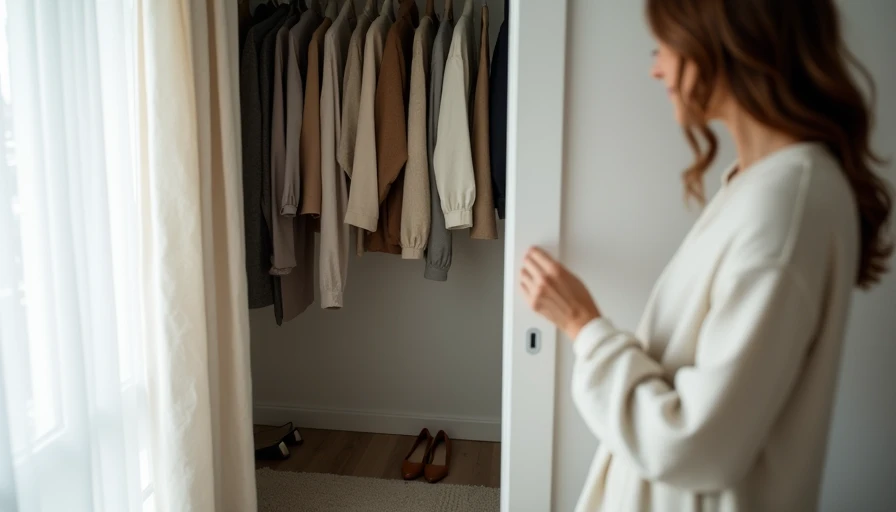

The problem with most closet audits is that they feel punitive. You are supposed to pull everything out, judge it harshly, and throw half of it into trash bags. This approach works for some people. It has never worked for me. The woman who already owns too much but wears too little does not need more judgment. She needs clarity. A gentle closet audit is not about getting rid of things. It is about understanding what you actually wear and why — and letting everything else fall away without guilt.

Start with the things you wear. Do not touch the rest yet. Go through your laundry bin and the small pile of clothes on the chair where you put things you are not ready to wash. Pull out the pieces you have worn in the last two weeks. Lay them on your bed. These are your real clothes. The rest of your closet — however full, however beautiful — is theoretical.
Ask three questions, and answer them honestly. The first question is about frequency: Why do I wear these specific things so often? The answer usually involves softness, ease, and the absence of distraction. You wear the sweater that does not itch. You wear the trousers that do not dig. You wear the dress that does not require a special bra. The second question is about avoidance: Why do I not wear the things I skip over? The answer is often physical — too tight, too stiff, too delicate to wash, too precious to risk. The third question is about repair: Could any of my unworn things become worn with a small intervention? A skirt that needs hemming. A blazer that needs letting out. A sweater that needs a pill comb. Separate the things that need repair and decide whether you care enough to fix them. If you do, book the tailor appointment before you close the notebook. If you do not, let the garment go.

Do not throw things away in a frenzy. Take the pieces you no longer wear and put them in a bag. Put the bag somewhere you cannot see it — under the bed, in a hall closet. Wait a month. If you do not reach for anything in the bag during that time, you are ready to donate it. If you do pull something out, you have learned something about what you need.
A gentle closet audit does not end with a near-empty wardrobe. It ends with a wardrobe where the things you actually wear are visible, accessible, and surrounded by enough space that you can see them. The goal is not minimalism. The goal is clarity.
Dress for the life you are gently returning to.